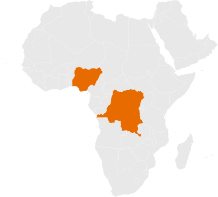
Strengthening Coordination of Digital Health Equipment in the Democratic Republic of Congo
Strengthening Coordination of Digital Health Equipment in the Democratic Republic of Congo

Published on: July 2026
Introduction (French)
Effective management of biomedical and digital health equipment depends on having reliable, up-to-date information on which assets exist, where they are located, and how they are used. In many health systems, this information remains fragmented, spread across institutions, partners, and programmes, limiting the ability of decision-makers to effectively plan and allocate resources where they are most needed.
In the Democratic Republic of Congo (DRC), multiple digital health tools and equipment are deployed at national and subnational levels by government institutions, development partners, and implementing organisations. While these investments support service delivery, they often operate in parallel, with limited coordination or interoperability. As a result, obtaining a comprehensive, system-wide overview of available equipment and identifying gaps that affect planning and service delivery remain persistent challenges.
Without a clear understanding of available biomedical and digital health equipment, institutions may face difficulties coordinating investments, managing maintenance, identifying resource gaps, and ensuring that critical technologies are available where they are needed most. Strengthening visibility of these assets is therefore an important step toward improving health system performance and supporting data-informed decision-making.
Introduction (French)
Effective management of biomedical and digital health equipment depends on having reliable, up-to-date information on which assets exist, where they are located, and how they are used. In many health systems, this information remains fragmented, spread across institutions, partners, and programmes, limiting the ability of decision-makers to effectively plan and allocate resources where they are most needed.
In the Democratic Republic of Congo (DRC), multiple digital health tools and equipment are deployed at national and subnational levels by government institutions, development partners, and implementing organisations. While these investments support service delivery, they often operate in parallel, with limited coordination or interoperability. As a result, obtaining a comprehensive, system-wide overview of available equipment and identifying gaps that affect planning and service delivery remain persistent challenges.
Without a clear understanding of available biomedical and digital health equipment, institutions may face difficulties coordinating investments, managing maintenance, identifying resource gaps, and ensuring that critical technologies are available where they are needed most. Strengthening visibility of these assets is therefore an important step toward improving health system performance and supporting data-informed decision-making.

Addressing Fragmentation in the Digital Health Ecosystem
The digital health landscape in the DRC includes multiple platforms and tools supporting programme implementation, service delivery, and system management. While these tools generate valuable data, they frequently function independently of one another. Information on the availability, location, and condition of biomedical and digital health equipment is therefore not consistently consolidated across programmes or geographies.
This fragmentation limits the ability of institutions to develop a clear, system-wide understanding of available resources and identify gaps that may undermine service delivery. The digital equipment inventory intervention was designed to address this challenge by establishing a centralized digital system through which stakeholders can document, track, and update information on biomedical and digital health equipment nationwide.
The system is expected to be hosted and maintained by the Agence Nationale d’Ingénierie Clinique et du Numérique de la Santé (ANICNS). Through the platform, government institutions and partners will be able to contribute to a shared data environment, improving asset visibility and supporting coordination across the health sector.
Addressing Fragmentation in the Digital Health Ecosystem
The digital health landscape in the DRC includes multiple platforms and tools supporting programme implementation, service delivery, and system management. While these tools generate valuable data, they frequently function independently of one another. Information on the availability, location, and condition of biomedical and digital health equipment is therefore not consistently consolidated across programmes or geographies.
This fragmentation limits the ability of institutions to develop a clear, system-wide understanding of available resources and identify gaps that may undermine service delivery. The digital equipment inventory intervention was designed to address this challenge by establishing a centralized digital system through which stakeholders can document, track, and update information on biomedical and digital health equipment nationwide.
The system is expected to be hosted and maintained by the Agence Nationale d’Ingénierie Clinique et du Numérique de la Santé (ANICNS). Through the platform, government institutions and partners will be able to contribute to a shared data environment, improving asset visibility and supporting coordination across the health sector.

Implementation Approach
The intervention is structured over a seven-month period, organized into three sequential phases.
Phase one focuses on defining system requirements and establishing foundations for the digital inventory. Activities include stakeholder mapping, consultations with national and provincial institutions, and documentation of existing inventory mechanisms. This phase also covers the design of system architecture, including data standards, interoperability considerations, and governance arrangements.
Phase two centers on developing a digital inventory prototype platform. Core components include data entry interfaces, dashboards, and reporting tools. Pilot testing with selected institutions is used to assess usability, data quality, and alignment with operational workflows.
Phase three emphasizes integration with the national health ecosystem. This includes developing guidance on system management, data governance, and long-term maintenance, as well as training materials to support adoption by national and provincial stakeholders.
Implementation Approach
The intervention is structured over a seven-month period, organized into three sequential phases.
Phase one focuses on defining system requirements and establishing foundations for the digital inventory. Activities include stakeholder mapping, consultations with national and provincial institutions, and documentation of existing inventory mechanisms. This phase also covers the design of system architecture, including data standards, interoperability considerations, and governance arrangements.
Phase two centers on developing a digital inventory prototype platform. Core components include data entry interfaces, dashboards, and reporting tools. Pilot testing with selected institutions is used to assess usability, data quality, and alignment with operational workflows.
Phase three emphasizes integration with the national health ecosystem. This includes developing guidance on system management, data governance, and long-term maintenance, as well as training materials to support adoption by national and provincial stakeholders.

Supporting Data-Informed Health System Management
A centralized digital inventory system for biomedical and digital health equipment can significantly strengthen coordination and planning within the health sector. By consolidating equipment data within a single platform, stakeholders are better positioned to understand resource distribution, identify gaps, coordinate investments, and make more informed decisions that support service delivery.
The intervention also seeks to strengthen accountability and improve visibility of health assets across the system. Through a shared and continuously updated source of information, institutions and partners can work from a common understanding of available resources, supporting more efficient planning and resource allocation.
Through collaboration between national institutions, implementing organisations, and technical partners, this intervention seeks to strengthen the management of biomedical and digital health equipment and support more data-informed decision-making within the health system.
This initiative is supported by the Umbrella Fund , which invests in innovative, locally led solutions that strengthen health systems and improve access to quality health services across Africa.
Supporting Data-Informed Health System Management
A centralized digital inventory system for biomedical and digital health equipment can significantly strengthen coordination and planning within the health sector. By consolidating equipment data within a single platform, stakeholders are better positioned to understand resource distribution, identify gaps, coordinate investments, and make more informed decisions that support service delivery.
The intervention also seeks to strengthen accountability and improve visibility of health assets across the system. Through a shared and continuously updated source of information, institutions and partners can work from a common understanding of available resources, supporting more efficient planning and resource allocation.
Through collaboration between national institutions, implementing organisations, and technical partners, this intervention seeks to strengthen the management of biomedical and digital health equipment and support more data-informed decision-making within the health system.
This initiative is supported by the Umbrella Fund , which invests in innovative, locally led solutions that strengthen health systems and improve access to quality health services across Africa.