8 min read
Portability and Replicability of Geospatial and Health Data Training Programs: A Coordinated Approach to Capacity Development
Published on
July 2025
Introduction
In low-resource settings, data-driven decision-making is not just beneficial—it’s essential. Every decision carries significant implications, especially for the most vulnerable populations. Recognizing this, data partners have made substantial investments to promote the use of data in shaping health interventions. At the forefront of this effort is the use of geospatial data, which enhances the ability to determine where, who, and how to deploy health system support more effectively.
Traditionally, geospatial data through local navigation and settlement mapping has been the domain of specialized health data teams, primarily used for microplanning activities. However, its use remains limited. Many frontline health data teams still rely heavily on local knowledge and intuition when making critical healthcare delivery decisions.
Dev-Afrique Development Advisors, with support from the Geospatial Insights Support Team (GIST) of the Gates Foundation, has conducted extensive consultants and assessments to understand the capacity needs for geospatial data use in key health programs. These assessments revealed several recurring challenges: ·
Fragmented and uncoordinated geospatial training programs
Limited integration of local use cases in training materials
Unsustained capacity development initiatives
Mismatch between training provided and actual needs
A Strategic Investment in Local Geospatial Data Capacity
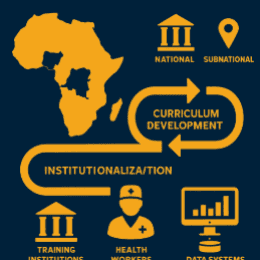
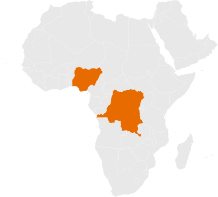
To address these challenges, the Umbrella Fund for Geospatial Interventions is investing in catalytic initiatives aimed at improving coordination and scalability of geospatial and health data training. The focus is on establishing pathways to building the capacity of health data teams working at the grassroots level. Following consultations with key stakeholders, the Fund is supporting the development of a comprehensive geospatial and health data curriculum and institutionalization of the curriculum at accredited training institutions in Nigeria and the Democratic Republic of Congo (DRC).
A two-tiered implementation approach will be deployed with focused interventions:
At the national level:
Coordinate curriculum development by incorporating real-world geospatial use cases from both national and subnational health teams
Establish a clear pathway for scaling and replicating the curriculum across geospatial and health data systems in both countries
At the subnational level:
Engaging stakeholders to define specific geospatial and health data needs across health programs
Institutionalizing the curriculum in local training institutions to create structured training pathways for state-level primary healthcare boards.
Strengthening the Health Data Ecosystem
This investment is expected to significantly improve access to tailored geospatial training programs, promote equitable access to training opportunities, and enhance geospatial data literacy among health program teams. By reducing reliance on external partners for capacity building, the initiative also offers a cost-effective solution for organizations seeking geospatial expertise.
Our optimism is grounded in a shared commitment to local ownership, stakeholder coordination, and value-driven implementation. With strong buy-in from key actors in the geospatial data space, this initiative is poised to deliver lasting impact.