From Curriculum to Practice: How Subnational Institutions Are Turning Geospatial Training into System Capacity
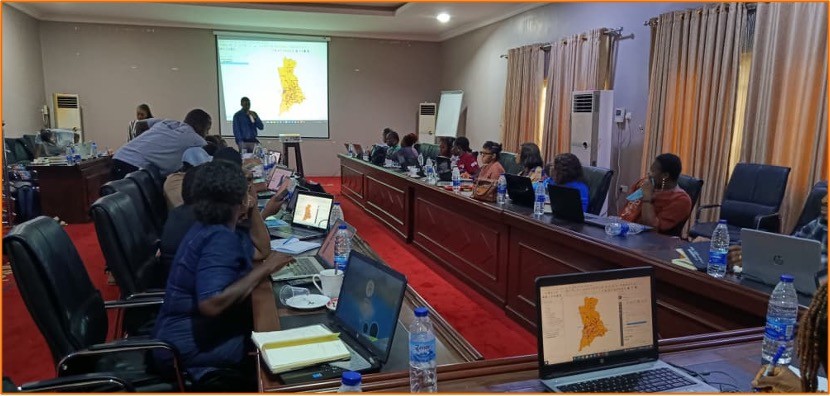
8 min read
From Curriculum to Practice: How Subnational Institutions Are Turning Geospatial Training into System Capacity
Published on
March 2026
Published on
March 2026
Introduction
Introduction
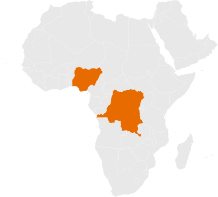
Across Nigeria and the Democratic Republic of Congo (DRC), geospatial capacity has long been built through pilots—short-term trainings that end when projects close. Ecosystem actors have noted the challenge this arising from this approach, including skills being unevenly retained, weak institutional ownership, and persistent dependence on external partners.
The Umbrella Fund for Geospatial Interventions is deliberately changing this trajectory. Rather than focusing on training delivery alone, the Fund is investing in subnational curriculum validation and institutionalization, by embedding geospatial learning within the universities and training institutions that shape the health workforce.
The Funds’ investments are currently anchored in four subnational contexts:
Kano State (Nigeria): eHealth Africa, through Bayero University Kano (BUK)
Borno State (Nigeria): FACT Foundation, through the University of Maiduguri (UNIMAID)
Anambra State (Nigeria): Octave Analytics, through the Anambra State College of Health Technology (ASCOHT)
Kasaï Central (DRC): Kinshasa School of Public Health (KSPH), through the Université Officielle de Kananga (UOK)
Why Subnational Institutionalization is the Missing Link
Why Subnational Institutionalization is the Missing Link
Health programs are implemented at state, provincial, and local levels, yet capacity capacity-building efforts have often bypassed the very institutions responsible for training and deploying the workforce. One-off workshops, limited contextualization, and weak academic anchoring have constrained scale and sustainability.
By embedding geospatial curricula within subnational universities and colleges, the Umbrella Fund is addressing this structural gap. The objective is institutional adoption, ensuring that geospatial capacity is repeatedly taught, formally recognized, and routinely applied within health systems.
Through this investment, the Umbrella Fund is also creating a cost‑efficient pathway for ecosystem actors, who can leverage these established, accredited training structures to deliver future capacity‑building initiatives. This reduces the need to repeatedly develop new curricula or independently organize training delivery, enabling partners to redirect resources toward implementation and scale.
A Shared Subnational Strategy
Across Nigeria and the DRC, implementation follows a common logic:
Curriculum validation with subnational stakeholders, grounding content in operational realities
Institutional hosting and governance, shifting ownership from projects to academic systems
Practice oriented learning, explicitly linked to PHC planning, disease surveillance, and routine monitoring
Health programs are implemented at state, provincial, and local levels, yet capacity capacity-building efforts have often bypassed the very institutions responsible for training and deploying the workforce. One-off workshops, limited contextualization, and weak academic anchoring have constrained scale and sustainability.
By embedding geospatial curricula within subnational universities and colleges, the Umbrella Fund is addressing this structural gap. The objective is institutional adoption, ensuring that geospatial capacity is repeatedly taught, formally recognized, and routinely applied within health systems.
Through this investment, the Umbrella Fund is also creating a cost‑efficient pathway for ecosystem actors, who can leverage these established, accredited training structures to deliver future capacity‑building initiatives. This reduces the need to repeatedly develop new curricula or independently organize training delivery, enabling partners to redirect resources toward implementation and scale.
A Shared Subnational Strategy
Across Nigeria and the DRC, implementation follows a common logic:
Curriculum validation with subnational stakeholders, grounding content in operational realities
Institutional hosting and governance, shifting ownership from projects to academic systems
Practice oriented learning, explicitly linked to PHC planning, disease surveillance, and routine monitoring
Subnational Implementation Snapshot
Nigeria
Kano State(eHealth Africa): Managing Complexity Through Scale and Inclusion
Kano’s health and data ecosystem is one of the most complex in Nigeria, spanning multiple agencies, partners, and academic actors. eHealth Africa responded by prioritizing breadth and inclusion in curriculum validation.
Through a structured engagement process, 273 stakeholders across government, academia, and implementing partners contributed inputs that shaped curriculum relevance and sequencing. This scale of engagement strengthened legitimacy and created a shared understanding of what usable geospatial capacity looks like across PHC, LGA, and state levels.
Subnational Implementation Snapshot
Nigeria
Kano State(eHealth Africa): Managing Complexity Through Scale and Inclusion
Kano’s health and data ecosystem is one of the most complex in Nigeria, spanning multiple agencies, partners, and academic actors. eHealth Africa responded by prioritizing breadth and inclusion in curriculum validation.
Through a structured engagement process, 273 stakeholders across government, academia, and implementing partners contributed inputs that shaped curriculum relevance and sequencing. This scale of engagement strengthened legitimacy and created a shared understanding of what usable geospatial capacity looks like across PHC, LGA, and state levels.

Training delivery has been anchored within Centre for Dryland Agriculture at Bayero University Kano, positioning the University as the long-term institutional owner. As the intervention approaches closeout, it leaves behind a validated curriculum, an engaged academic host, and an established pathway for continued delivery beyond the Fund’s direct support.
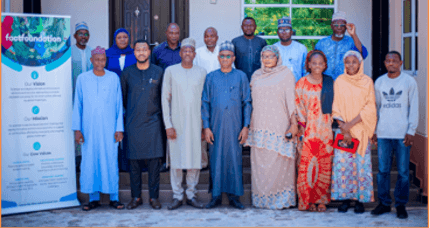
Borno State (Fact Foundation): Institutional Commitment
In Borno, where geospatial intelligence is critical for equitable service delivery in hard to reach and conflict affected areas, the defining strength of the intervention has been formal institutional anchoring.
FACT Foundation facilitated sustained coordination between state health actors and university leadership, culminating in one formal MoU with the University of Maiduguri. This agreement moves geospatial training from an ad hoc activity to an institutionally recognized mandate.
Training delivery has been anchored within Centre for Dryland Agriculture at Bayero University Kano, positioning the University as the long-term institutional owner. As the intervention approaches closeout, it leaves behind a validated curriculum, an engaged academic host, and an established pathway for continued delivery beyond the Fund’s direct support.
Anambra State (Octave Analytics): Institutionalizing Geospatial Skills
In Anambra, the intervention’s strategic value lies where it is embedded. The Anambra State College of Health Technology is a primary pipeline into the state’s health workforce, training a large share of frontline and mid‑level cadres.
By embedding geospatial content within ASCOHT, the intervention establishes two complementary pathways:Anambra State (Octave Analytics): Institutionalizing Geospatial Skills
Pre‑service training, ensuring new graduates enter the workforce with foundational geospatial competencies
Short course certification for in service staff, enabling existing health workers to upskill in facility mapping, microplanning, and routine monitoring
This dual model institutionalizes geospatial capacity both before entry into service and during deployment, creating a continuous and renewable source of geospatially literate health workers.
Training delivery has been anchored within Centre for Dryland Agriculture at Bayero University Kano, positioning the University as the long-term institutional owner. As the intervention approaches closeout, it leaves behind a validated curriculum, an engaged academic host, and an established pathway for continued delivery beyond the Fund’s direct support.
Borno State (Fact Foundation): Institutional Commitment
In Borno, where geospatial intelligence is critical for equitable service delivery in hard to reach and conflict affected areas, the defining strength of the intervention has been formal institutional anchoring.
FACT Foundation facilitated sustained coordination between state health actors and university leadership, culminating in one formal MoU with the University of Maiduguri. This agreement moves geospatial training from an ad hoc activity to an institutionally recognized mandate.


Democratic Republic of Congo
Kasaï Central (Université Officielle de Kananga): From Governance Approval to First Deployment
In the DRC, subnational institutionalization is advancing through provincial universities supported by KSPH. At the Université Officielle de Kananga, the geospatial training programme has achieved a critical milestone: formal approval by the University’s academic committee.
This approval enables the University to move from validation to delivery. Kananga is now preparing to deploy its first training cohort for PHC teams within the province, embedding geospatial capacity directly within provincial planning and surveillance functions.
The Kananga experience is also catalytic. Further approvals are anticipated from three additional universities (Université Officielle de Mbuji Mayi, Université Officielle de Bukavu, and Université de Lubumbashi) laying the foundation for a coordinated provincial training network aligned under a common curriculum framework.
What the Early Outcomes Tell Us
Across all four contexts, early results point to a consistent pattern:
Academic institutions are assuming ownership of geospatial training mandates
Curriculum content is better aligned with real program needs, not abstract technical theory
Learning pathways are formally recognized, rather than informally delivered
Capacity is positioned to scale through existing institutional structures
Aligning Subnational Delivery with National Systems
Crucially, subnational institutionalization does not operate in isolation. These efforts are deliberately aligned with national curriculum frameworks supported by the Umbrella Fund, ensuring coherence, quality assurance, and portability of skills across levels.
This two-way alignment keeps national standards grounded in implementation realities while enabling subnational institutions to deliver training that is credible, standardized, and scalable.
Looking Ahead: Through Institutions, Not Projects
As these pilots mature, the next phase will focus on formal adoption within institutional governance structures, expansion across additional cohorts and departments, and tighter linkage between training delivery and PHC program needs.
Training delivery has been anchored within Centre for Dryland Agriculture at Bayero University Kano, positioning the University as the long-term institutional owner. As the intervention approaches closeout, it leaves behind a validated curriculum, an engaged academic host, and an established pathway for continued delivery beyond the Fund’s direct support.
Anambra State (Octave Analytics): Institutionalizing Geospatial Skills
In Anambra, the intervention’s strategic value lies where it is embedded. The Anambra State College of Health Technology is a primary pipeline into the state’s health workforce, training a large share of frontline and mid‑level cadres.
By embedding geospatial content within ASCOHT, the intervention establishes two complementary pathways:Anambra State (Octave Analytics): Institutionalizing Geospatial Skills
Pre‑service training, ensuring new graduates enter the workforce with foundational geospatial competencies
Short course certification for in service staff, enabling existing health workers to upskill in facility mapping, microplanning, and routine monitoring
This dual model institutionalizes geospatial capacity both before entry into service and during deployment, creating a continuous and renewable source of geospatially literate health workers.
Democratic Republic of Congo
Kasaï Central (Université Officielle de Kananga): From Governance Approval to First Deployment
In the DRC, subnational institutionalization is advancing through provincial universities supported by KSPH. At the Université Officielle de Kananga, the geospatial training programme has achieved a critical milestone: formal approval by the University’s academic committee.
This approval enables the University to move from validation to delivery. Kananga is now preparing to deploy its first training cohort for PHC teams within the province, embedding geospatial capacity directly within provincial planning and surveillance functions.
The Kananga experience is also catalytic. Further approvals are anticipated from three additional universities (Université Officielle de Mbuji Mayi, Université Officielle de Bukavu, and Université de Lubumbashi) laying the foundation for a coordinated provincial training network aligned under a common curriculum framework.
What the Early Outcomes Tell Us
Across all four contexts, early results point to a consistent pattern:
Academic institutions are assuming ownership of geospatial training mandates
Curriculum content is better aligned with real program needs, not abstract technical theory
Learning pathways are formally recognized, rather than informally delivered
Capacity is positioned to scale through existing institutional structures
Aligning Subnational Delivery with National Systems
Crucially, subnational institutionalization does not operate in isolation. These efforts are deliberately aligned with national curriculum frameworks supported by the Umbrella Fund, ensuring coherence, quality assurance, and portability of skills across levels.
This two-way alignment keeps national standards grounded in implementation realities while enabling subnational institutions to deliver training that is credible, standardized, and scalable.
Looking Ahead: Through Institutions, Not Projects
As these pilots mature, the next phase will focus on formal adoption within institutional governance structures, expansion across additional cohorts and departments, and tighter linkage between training delivery and PHC program needs.